
The engine management light (EML) — that amber engine-shaped icon — is the most misunderstood warning light on any dashboard. It covers literally hundreds of different fault codes, from a loose fuel cap to a failing turbocharger. Here's what it actually means and what to do about it.
It depends entirely on what's triggered it. The EML can indicate something minor (a faulty sensor reading that doesn't affect drivability) or something that could cause serious engine damage if ignored (a misfiring cylinder, a failing catalytic converter under load, or a critically blocked DPF on a diesel).
The rule of thumb: if the light is steady amber and the car is driving normally, you have time to get it read in the next day or two. If it's flashing or red, or the car is running roughly, misfiring, or losing power — stop driving and get it diagnosed today.
One of the most common causes we see, particularly on direct-injection petrol engines and high-mileage turbodiesels. Carbon deposits on EGR valves, intake ports and combustion chambers cause poor combustion, misfires, and rough idle — all of which trigger the EML. A hydrogen carbon clean often clears this without any parts replacement.
On diesel vehicles, an EML alongside a DPF warning light almost always means a blocked or failing particulate filter — or a fault in the DPF regeneration system (such as a failed fuel vaporizer). Don't confuse this with the DPF light alone — both lights together indicate the ECU is actively managing a DPF fault. See our guide on DPF warning lights for more.
O2 sensors monitor exhaust gas composition and feed data to the ECU for fuelling corrections. A faulty sensor causes the ECU to run too rich or too lean — wasting fuel, increasing emissions, and potentially damaging the catalytic converter over time. Diagnostics will identify which sensor and whether it needs cleaning or replacement.
The MAF sensor measures the volume of air entering the engine. A dirty or faulty MAF sensor causes incorrect fuelling — symptoms include rough idle, poor fuel economy, and sluggish acceleration. A scan showing MAF-related codes alongside live data reading out of expected range confirms this fault.
On turbocharged engines, boost pressure faults — from a leaking intercooler pipe, a worn turbo, or a faulty boost solenoid — all trigger the EML. Boost-related codes alongside actual vs. requested boost readings in live data will identify whether the fault is a leak, actuator, or turbo itself. See our notes on limp mode caused by boost faults.
Faulty spark plugs or ignition coils cause cylinder misfires — often felt as a shudder or vibration under acceleration, especially when cold. A misfiring cylinder left unaddressed can damage the catalytic converter in hours of driving. This is one of the EML triggers that needs same-day attention.
| Cause | Engine | Urgency | Common symptoms |
|---|---|---|---|
| Carbon build-up | Petrol + diesel | Medium | Rough idle, poor economy, slight hesitation |
| DPF fault | Diesel | High | DPF + EML lights, power loss |
| O2 sensor fault | Petrol + diesel | Medium | Poor MPG, failed emissions |
| MAF sensor fault | Petrol + diesel | Medium | Sluggish, poor idle, rich running |
| Boost / turbo fault | Turbo engines | High | Flat power, possible limp mode |
| Ignition misfire | Petrol | Very high | Shudder, vibration, rough running |
A £10–£30 consumer OBD reader plugged into your car's diagnostic port will read generic engine fault codes from the main engine management module. That's it.
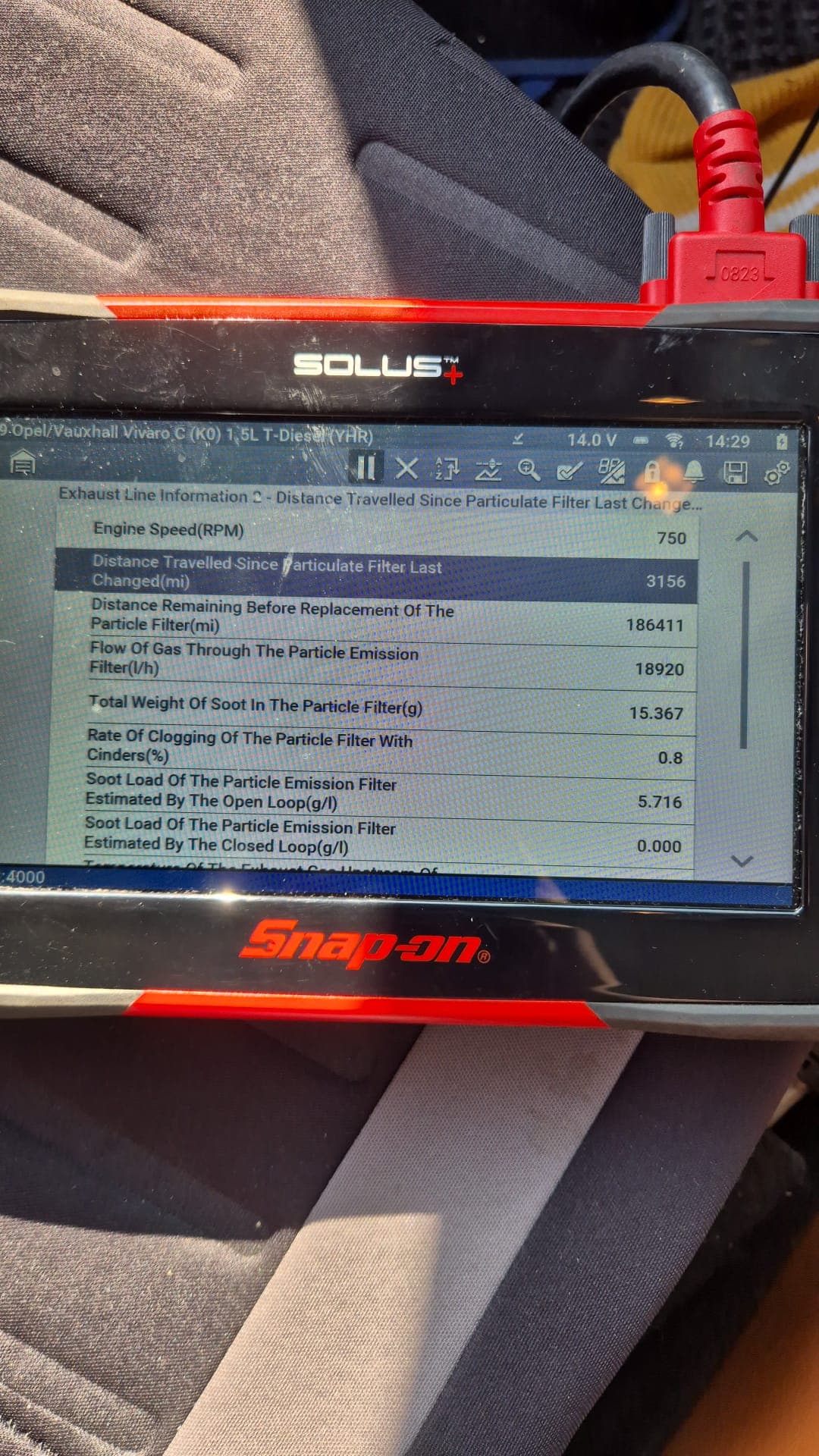
Dealer-level diagnostic equipment reads every control module in the vehicle — engine, gearbox, ABS, airbags, body control module, instrument cluster — including manufacturer-specific codes that generic readers can't interpret. More importantly, live data streams let us watch sensor readings in real time while the engine runs, which is how you find the actual cause rather than just the symptom.
A generic reader might tell you "P0420 — catalyst system efficiency below threshold." Dealer-level equipment watching live O2 sensor data tells you whether that's a faulty lambda sensor, a genuine cat failure, or a misfiring cylinder that's damaged the cat. Those are three completely different fixes at very different costs.
Engine management light on in West Yorkshire? We come to you with the same diagnostic equipment main dealers use — read every module, watch live data, find the actual cause. From £49.
For some faults, nothing in the short term — the car keeps running and the fault remains stored. For others, ignoring it multiplies the repair cost dramatically:
The diagnostic fee starts at £49. It's always cheaper than the alternative of guessing — or of waiting until the car stops.
Still unsure? Call AJ on 07388 808861 and describe what the car is doing. We'll tell you whether it sounds urgent and whether a mobile visit is likely to get to the bottom of it.