
Your car suddenly feels sluggish, won't rev past a certain point, and warning lights are blazing on the dashboard. You're in limp mode — also called limp home mode or safe mode. It's alarming, but it's your engine protecting itself, not failing. Here's what's causing it and what to do.
Limp mode is a fail-safe programmed into your engine's ECU. When it detects a fault serious enough to risk engine or transmission damage, it limits power — typically to around 2,000–2,500 rpm — so you can still drive to safety without causing further harm.
The key thing to understand: limp mode is a symptom of a fault, not the fault itself. Turning the car off and on again may temporarily clear it, but the underlying problem remains and limp mode will return — often worse.
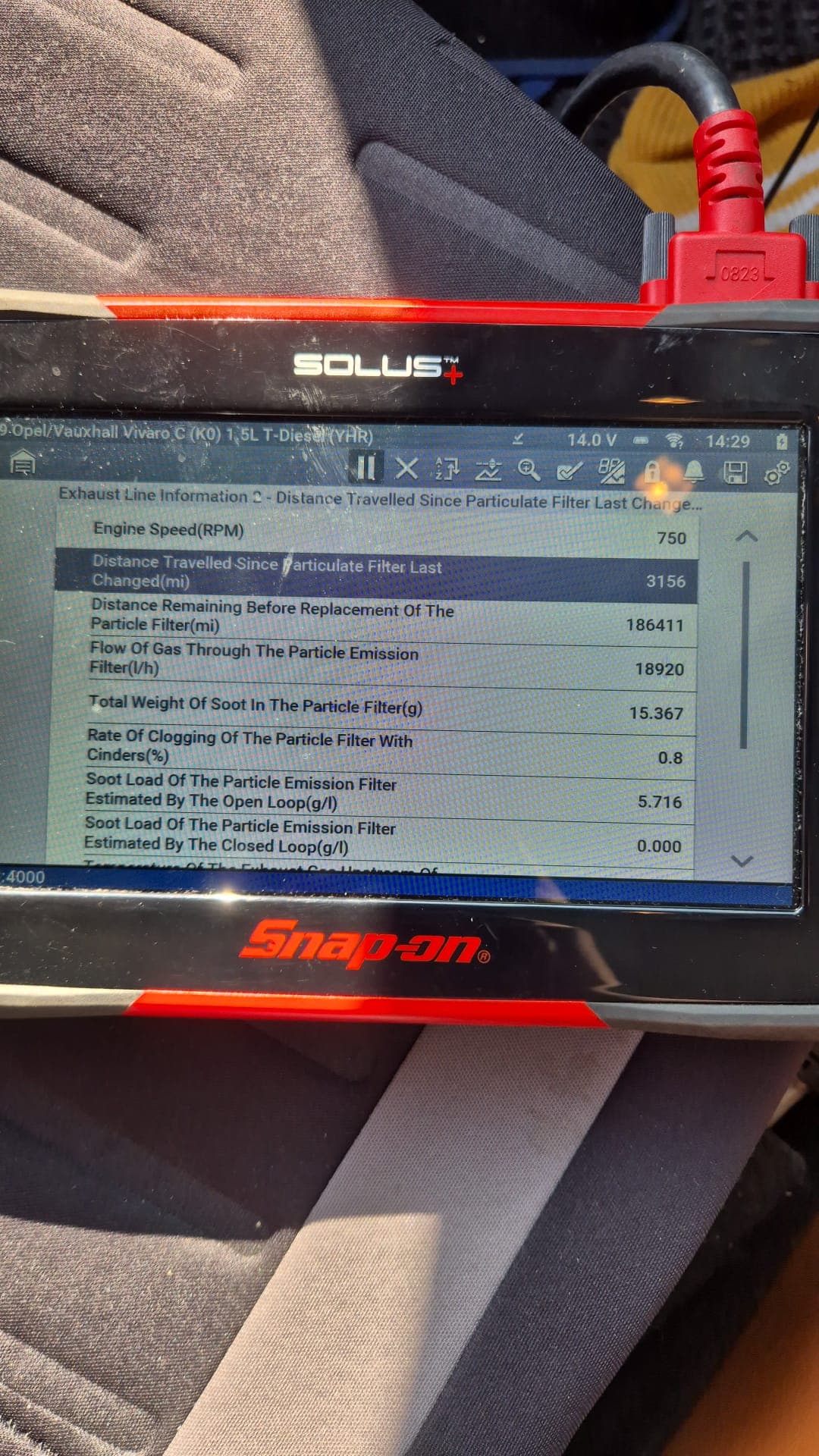
A severely blocked diesel particulate filter is one of the most frequent causes of limp mode in diesel vehicles. When the DPF reaches a critical blockage level, the ECU enters limp mode to prevent the filter from overheating or cracking. You'll typically see a DPF warning light alongside the engine management light, and power will be noticeably reduced.
Fix: professional DPF cleaning and a forced regeneration cycle. In most cases this fully resolves it without needing a new filter.
On turbocharged petrol and diesel engines, a split intercooler pipe, loose hose clamp, or cracked charge pipe causes a boost pressure drop. The ECU detects the turbo isn't producing expected pressure and pulls power to protect the engine. You'll notice a flat feeling under acceleration and often a slight hiss or whistle from the engine bay.
Fix: smoke testing is the most accurate way to locate a boost leak — we pressurise the intake side and watch for escaping smoke.
The exhaust gas recirculation (EGR) valve is a common failure point, especially on high-mileage diesels. A stuck-open EGR valve dilutes the intake charge and causes rough running, while a stuck-closed valve triggers fault codes related to emission control. Either can put the car into limp mode.
Fix: diagnostics to confirm the EGR fault code, followed by cleaning or replacement depending on severity.
A failing turbo — worn bearings, damaged vanes on a variable geometry turbo (VGT), or a solenoid fault — triggers boost-related fault codes and limp mode. This is more serious and may require turbo refurbishment or replacement, but diagnostics will confirm before any work is recommended.
Limp mode in an automatic is sometimes a gearbox self-protection response, not an engine fault. Symptoms include being stuck in one gear or very limited gear selection. Gearbox-specific fault codes will confirm whether the transmission or engine is the primary fault location.
Less well known but increasingly common — a failed fuel vaporizer stops DPF regeneration working, which leads to a critically blocked DPF, which triggers limp mode. If your fault codes reference the fuel vaporizer or DPF heater circuit alongside a DPF fault, this is likely the root cause. See our fuel vaporizer replacement service.
| Cause | Engine type | Key symptoms | Service needed |
|---|---|---|---|
| Blocked DPF | Diesel | DPF + EML lights, power loss | DPF cleaning |
| Boost leak | Turbo petrol/diesel | Flat acceleration, whistle | Smoke testing |
| EGR fault | Diesel | Rough idle, excess smoke | Diagnostics + EGR clean/replace |
| Turbo fault | Turbo petrol/diesel | No boost, sluggish | Diagnostics + turbo inspection |
| Gearbox fault | Automatic | Stuck in one gear | Gearbox diagnostics |
| Fuel vaporizer | Diesel | DPF recurring blocks | Vaporizer replacement |
Car gone into limp mode in West Yorkshire? We come to you with dealer-level diagnostic equipment, read every module, and tell you exactly what's causing it — from £49.
Short distances to a safe location — yes. Any significant distance — no. Limp mode reduces engine load to protect components, but the underlying fault that triggered it is still present. Continued driving risks converting a fixable fault into a far more expensive one.
Got questions about your specific situation? Call AJ on 07388 808861 — describe what the car is doing and we'll tell you honestly what's likely causing it. Our FAQ page also covers many common limp mode scenarios in detail.